Taoyuan Smart Streetlight Digital Transformation
Background
The project was implemented under a PFI (Private Finance Initiative) model for a 15-year smart streetlight infrastructure and operations program.
Previously, four independent systems operated in silos, with some processes still paper-based. Starting in 2022, the initiative aimed to rebuild and unify these systems into one cohesive platform, supporting six user groups: government agencies, PCM, contractors, administrative staff, field crews, and the general public.
I approached this project as a governance cycle—aligning stakeholders, designing institutional mechanisms, and ensuring real-world adoption and validation. The following sections outline the key stages of this process.
Challenges
- Organizational
Government, PCM, and dual contractors held different expectations for KPIs, transparency, and accountability—creating a three-way governance tension across seven stakeholder groups. - Technical
Four legacy systems needed to be refactored into six subsystems with unified data and workflows. The initial requirements exceeded 200 items, with high interdependencies. - Adoption
Most users relied heavily on paper-based processes with low digital literacy. Early interviews failed to distinguish administrative staff from field crews, resulting in an overly complex app and low adoption rates.
Actions
- Requirements Governance
Introduced a tracking and prioritization framework (necessity × impact × cost × consequence of omission) to narrow 200+ items to 120 core requirements, with 47 designated as launch-critical. Remaining features were scheduled in later phases, ensuring functional parity with legacy systems for a smooth transition. - Role-Based Design
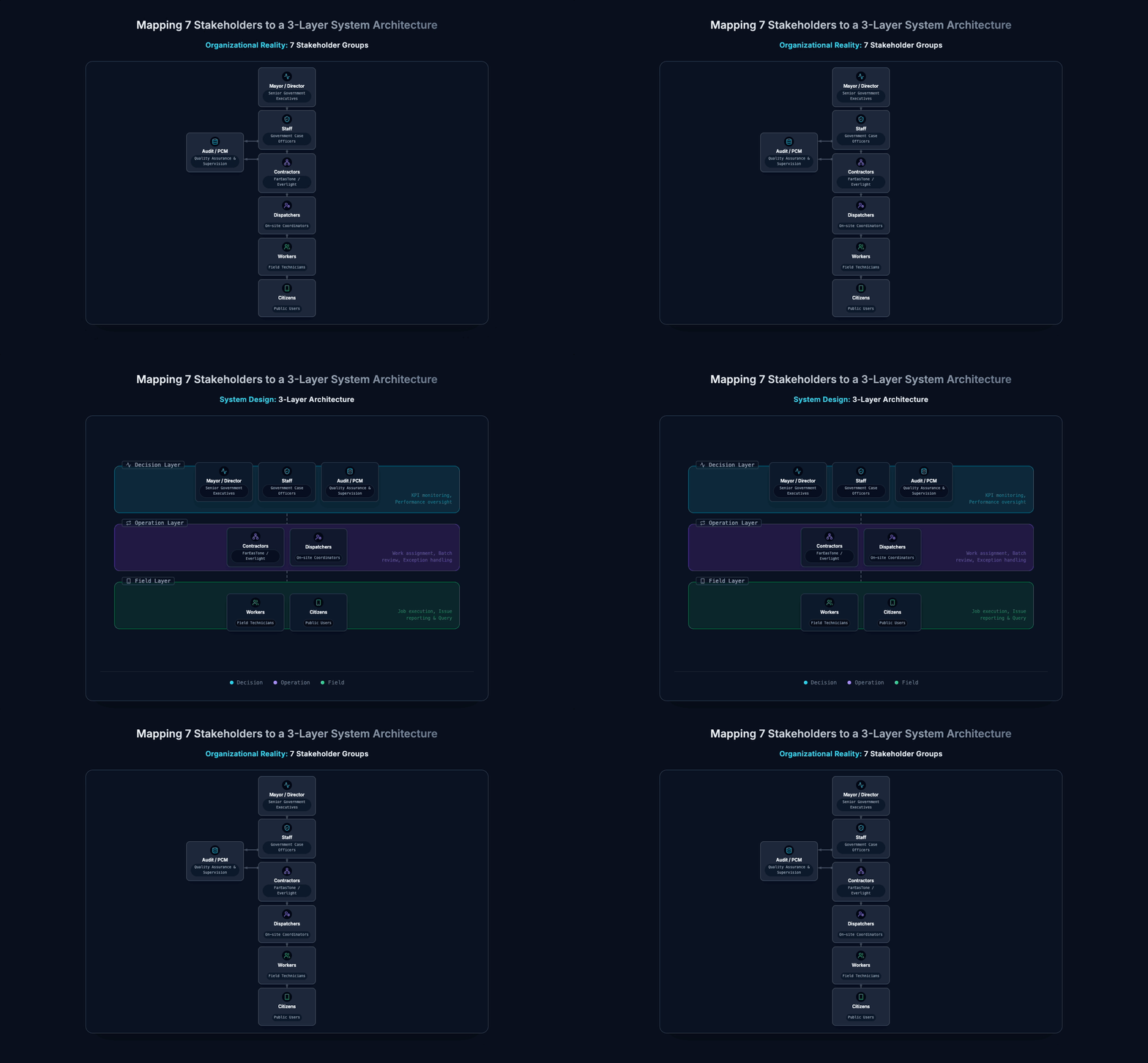
Defined a three-tier interface structure:
• Decision Layer — KPIs and system overview
• Operation Layer — Batch management, dispatch, and review
• Field Layer — One-handed operation, offline support, GPS reporting
Complexity was controlled through access rights and workflow boundaries, preventing interface overload. - Adoption Strategy
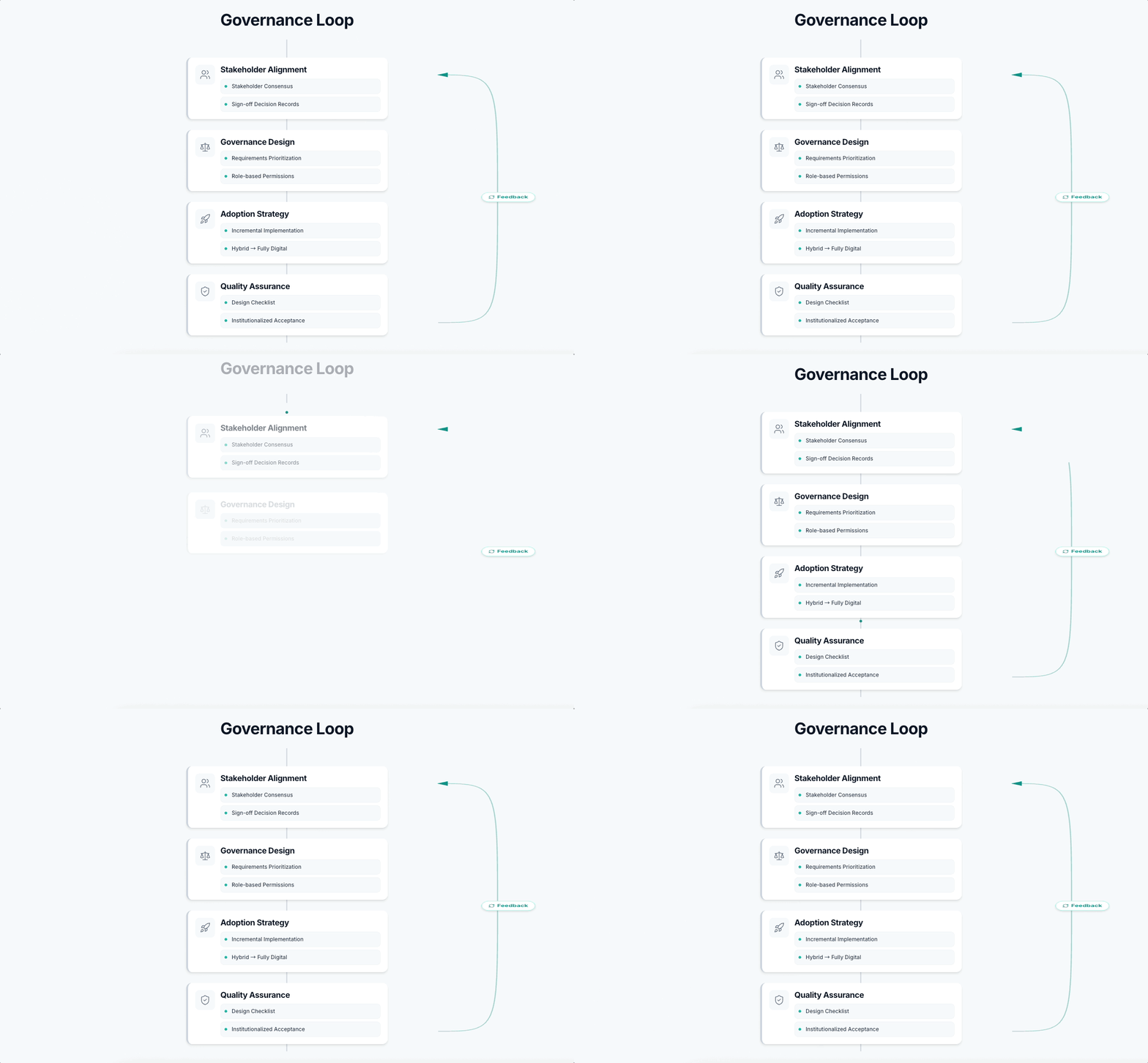
Applied a "Hybrid → Digital-First → Fully Digital" adoption path, anchored by sign-off–based governance to maintain transparency and dispute resolution at each phase. Internal teams digitized data and conducted side-by-side training before rollout, reducing resistance and turning "compliance" into voluntary engagement. - Acceptance & Verification
Established a "Design Comparison Sheet + Sign-off" mechanism. Any deviation in UI or interaction design required formal approval, which then served as the official basis for acceptance. This institutionalized approach ensured traceable delivery and consistent quality.
Execution
- Case A|User Adoption & Workflow Redesign
Recognized the distinction between administrative crews and on-site field crews. The app was simplified to minimal reporting (scan hardware, take repair photo, select fault reason), while supporting data entry was completed via web by local staff—enabling hybrid deployment. - Case B|Institutionalizing Requirements Governance
All stakeholders treated the requirement sheet as the single source of truth. Items were categorized as "Must-Deliver / Under Discussion / Post-Launch Optimization," providing a shared basis for negotiation and making "saying no" procedurally valid. - Case C|Governed Design Acceptance Loop
To address discrepancies between design and final output, a design verification + sign-off loop replaced verbal agreements. This clarified responsibilities across all three parties and significantly reduced acceptance disputes.
Results
The project achieved not only system integration but also established a digital governance framework across organizations—transforming city operations from reactive maintenance to sustainable smart infrastructure.
- Technology & Operations
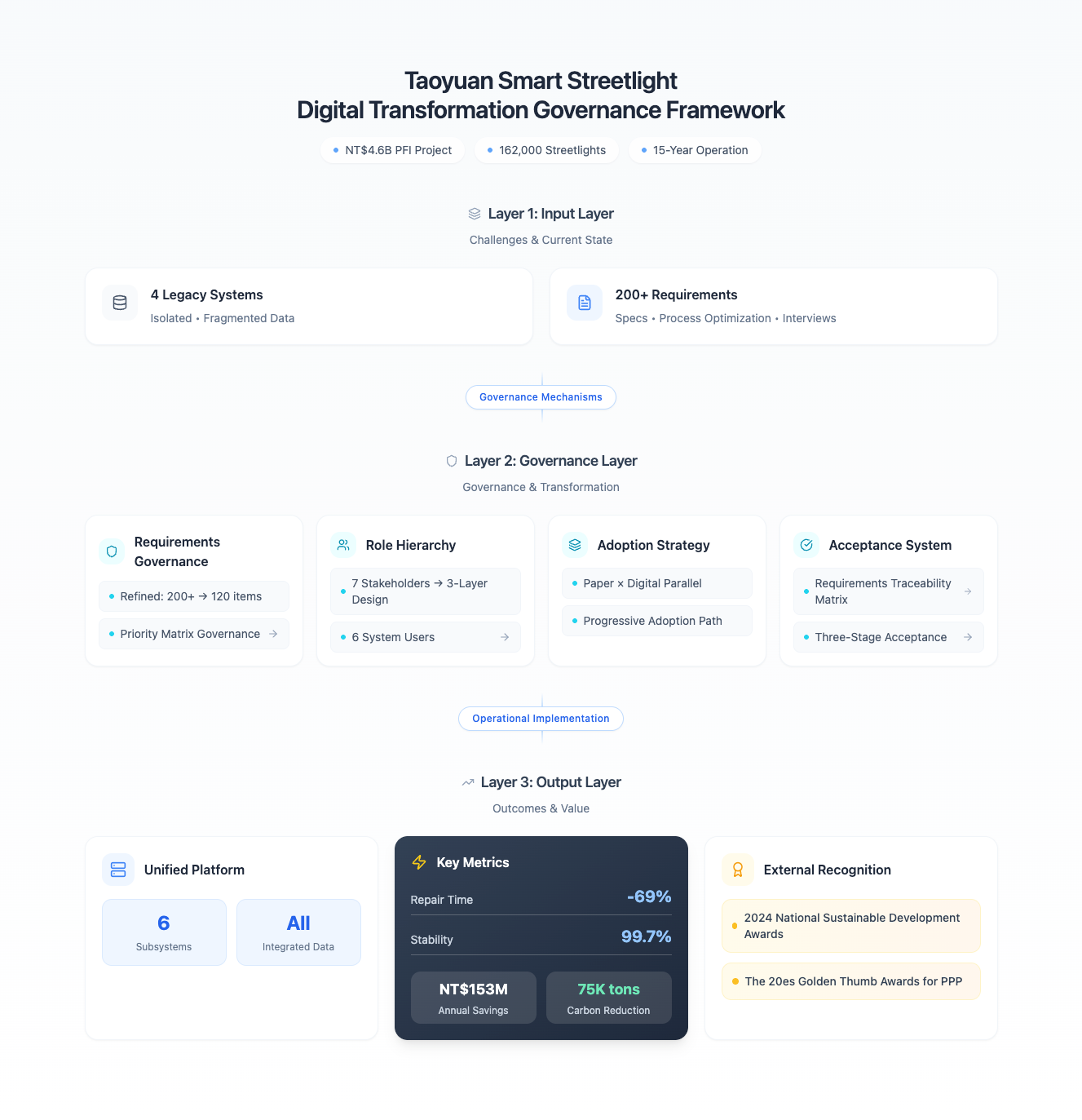
• Integrated 4 systems into one unified platform, serving 6 user roles and managing 162,000 smart streetlight endpoints
• Reduced average repair time from 48 to 15 hours, achieving a 69% improvement in efficiency while maintaining 99.7% system stability.
• Standardized permission layers, data consistency, and dispatch workflows - Environment & Sustainability
• Achieved NT$153M in annual energy savings and reduced CO₂ emissions by approximately 60,000 tons, representing a 70% increase in energy efficiency.
• Became Taiwan's first 100% smart streetlight city, laying the foundation for future smart city projects - Recognition
• National Sustainable Development Award (Government Sector, 2024)
• 20th Golden Thumb Award for Public Infrastructure Participation (Excellence + Innovation Awards)
Reflections
- Governance
Embedding disagreements into rules and uncertainties into processes creates sustainability beyond personal trust. - Research
Early misalignment in interview targets taught me that methodological rigor ≠ stakeholder accuracy—only by identifying who truly acts can insights be meaningful. - Execution
Design quality depends on institutionalized acceptance. To bridge the design–implementation gap, I mastered front-end development to ensure high-fidelity delivery from concept to production.
Urban Planning Validation Platform
Engineered Taipei’s first spatial validation system to automate the identification of 202 unregistered risk segments, achieving a full integration of 1,672 segments totaling 9.18 km.
NoteX
Identified performance bottlenecks through cross-layer diagnostics and A/B testing, successfully optimizing PDF load times from 6.59s to 0.6s—a 91% increase in efficiency.